

Barcode Verification Explained: Why Barcode Quality Matters
Modern businesses depend on accurate barcode scanning every day. From manufacturing and healthcare to warehousing, retail, and logistics, barcodes power inventory management, shipping, traceability, compliance, and workflow automation. When a barcode scans correctly, operations move efficiently. When it fails, the consequences can include production delays, shipping errors, rejected shipments, chargebacks, relabeling costs, and customer compliance issues.
Many companies assume that if a barcode scans with a handheld scanner, it is “good enough.” In reality, a barcode can scan successfully today while still failing industry quality standards or causing problems in automated environments. That is where barcode verification becomes critical.
Barcode verification measures barcode quality against established ISO standards to determine whether a barcode is compliant, readable, and consistently scannable across different devices and environments. It provides objective grading and helps identify print quality issues before labels reach production, customers, or the field.
At SSE Technologies, we help companies improve barcode quality, reduce operational risk, and meet customer compliance requirements through professional barcode verification services, troubleshooting, and print optimization.
What Is Barcode Verification?
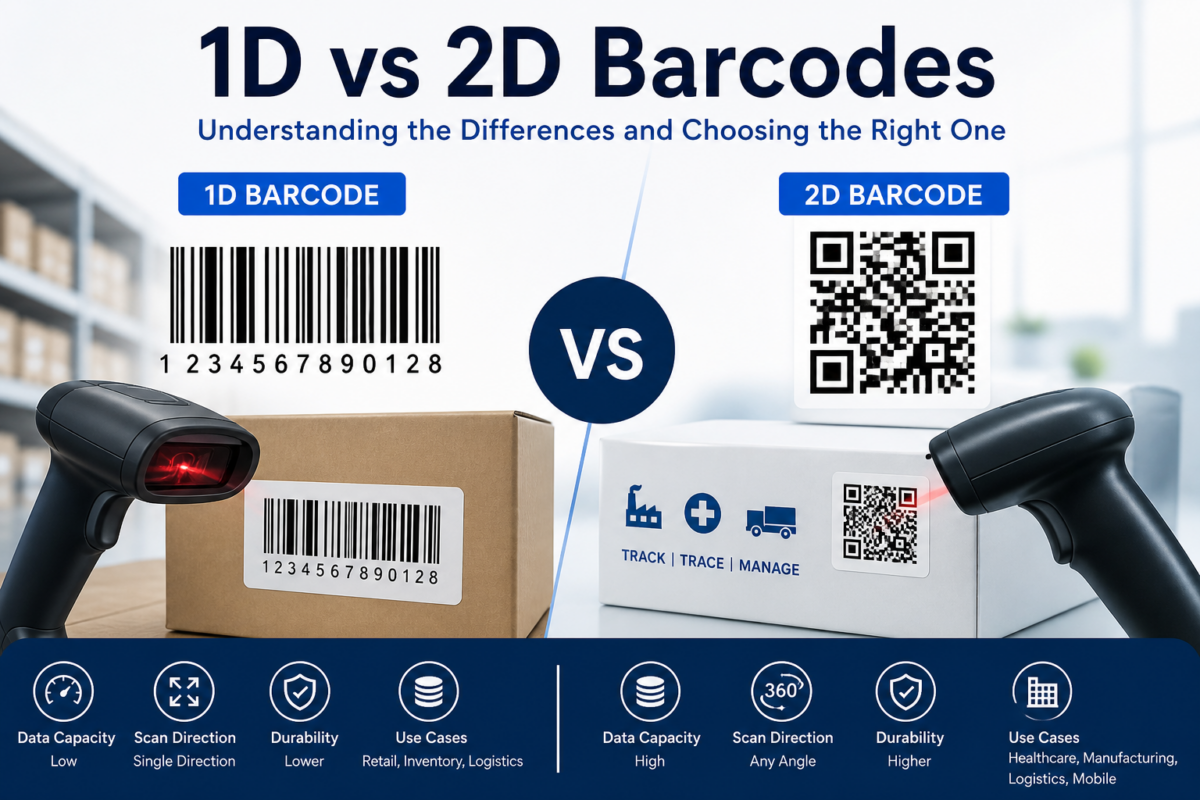
Barcode verification is the process of measuring a barcode’s print quality against internationally recognized standards such as ISO/IEC 15415 for 2D barcodes and ISO/IEC 15416 for 1D barcodes.
Unlike a barcode scanner, which simply determines whether a barcode can be decoded, a barcode verifier analyzes the symbol’s overall quality and assigns a measurable grade. Verification helps determine whether the barcode is likely to scan reliably across different scanners, environments, and applications.
Barcode Verification vs. Barcode Scanning
A barcode scanner answers one question:
“Can this barcode be read right now?”
A barcode verifier answers a much more important question:
“Will this barcode consistently scan correctly and meet industry standards?”
This distinction matters because many barcode issues are not immediately visible during normal scanning. A barcode may decode successfully on one scanner while failing on another scanner, fixed-mount system, or customer verification process.
Barcode verification identifies these issues early, before they create costly operational problems.
Why Barcode Verification Is Important
Barcode verification plays a critical role in maintaining operational efficiency, compliance, and supply chain reliability.
Prevents Scan Failures and Downtime
Poor barcode quality can slow down production lines, warehouse operations, and shipping processes. Operators may need to manually key in data or relabel products, reducing productivity and increasing labor costs.
In high-volume environments, even small barcode quality issues can create significant operational disruptions.
Supports Customer and Supplier Compliance
Many manufacturers, retailers, and suppliers require barcodes to meet minimum quality grades. For example, some specifications require 2D barcodes to achieve a minimum ISO grade of 2.0 or higher.
Failure to meet these requirements can result in:
-
Chargebacks
-
Rejected shipments
-
Supplier non-conformance reports
-
Delayed product acceptance
Barcode verification provides documented proof of compliance.
Reduces Relabeling and Shipping Errors
Barcode issues discovered after shipment often require relabeling, rework, or product returns. Verification helps identify quality issues before products leave the facility.
Supports Regulatory and Industry Requirements
Industries such as healthcare, pharmaceutical, aerospace, and automotive often require barcode verification as part of their quality processes.
Examples include:
-
UDI (Unique Device Identification)
-
GS1 barcode compliance
-
Aerospace traceability systems
-
Supplier labeling requirements
Improves Print Consistency
Verification helps companies monitor barcode quality across:
-
Different printers
-
Multiple production lines
-
Various label materials
-
Different shifts or operators
This consistency is critical in large-scale production environments.
Barcode Verification Standards
Barcode verification is based on internationally recognized ISO standards.
ISO/IEC 15415 for 2D Barcodes
ISO/IEC 15415 defines print quality grading requirements for two-dimensional barcodes such as:
-
Data Matrix
-
QR Code
-
GS1 DataMatrix
This standard evaluates factors including:
-
Symbol contrast
-
Modulation
-
Fixed pattern damage
-
Grid non-uniformity
-
Axial non-uniformity
-
Error correction capability
ISO/IEC 15416 for 1D Barcodes
ISO/IEC 15416 applies to linear (1D) barcodes such as:
-
Code 128
-
UPC
-
Code 39
-
GS1-128
The standard evaluates characteristics such as:
-
Edge contrast
-
Minimum reflectance
-
Defects
-
Decodability
-
Modulation
Understanding Barcode Grades
Barcode verification grades typically range from:
| Grade | Numeric Score |
|---|---|
| A | 4.0–3.5 |
| B | 3.4–2.5 |
| C | 2.4–1.5 |
| D | 1.4–0.5 |
| F | 0.4–0.0 |
One important concept is that the overall grade is determined by the lowest-scoring parameter. For example, a barcode may achieve A grades in most categories but still receive an overall C grade if one parameter falls below acceptable levels.
This approach helps identify the specific issue limiting barcode quality.
Common Causes of Poor Barcode Grades
Many barcode quality problems originate from printing or label design issues.
Low Contrast
Barcodes require strong contrast between dark and light areas. Poor contrast can make decoding difficult, especially in challenging lighting conditions.
Print Growth or Ink Spread
Excessive print darkness or ink spread can cause bars or modules to become too large, affecting readability and symbol geometry.
Axial Non-Uniformity
This occurs when modules become stretched or distorted in one direction, often due to printer mechanics or media movement.
Quiet Zone Violations
Barcodes require clear space around the symbol called the quiet zone. Graphics, text, or borders placed too close to the barcode can interfere with scanning.
Damaged Finder Patterns
For 2D barcodes such as Data Matrix and QR Codes, damaged finder or clocking patterns can impact symbol recognition.
Low Print Resolution
Insufficient print resolution can produce rough edges, inconsistent module sizes, and poor symbol clarity.
Improper Printer Settings
Incorrect printer speed, heat, ribbon selection, or calibration can significantly affect barcode quality.
Poor Label Materials
Substrate texture, coatings, and adhesive properties can influence print consistency and reflectivity.
How Barcode Verification Works
Professional barcode verification uses calibrated barcode verifiers designed to measure barcode quality under controlled conditions.
Unlike standard barcode scanners, verifiers use specialized optics, lighting, and software to analyze symbol characteristics according to ISO standards.
Key Verification Parameters
Symbol Contrast
Measures the difference between dark and light areas of the barcode.
Modulation
Evaluates consistency in reflectance across the symbol.
Decode
Confirms that the barcode can be decoded properly.
Fixed Pattern Damage
Measures damage or irregularities in required barcode patterns.
Grid Non-Uniformity
Evaluates module placement consistency within 2D barcodes.
Axial Non-Uniformity
Measures distortion between horizontal and vertical dimensions.
The Importance of Calibrated Equipment
Accurate verification requires ISO-compliant barcode verifiers that are properly calibrated. Certified equipment ensures:
-
Repeatable measurements
-
Traceable results
-
Standards compliance
-
Reliable grading consistency
This is especially important for regulated industries and supplier qualification processes.
How SSE Technologies Can Help
SSE Technologies provides professional barcode verification services using calibrated, ISO-compliant verification equipment.
Our services help customers:
-
Improve barcode quality
-
Meet customer and supplier requirements
-
Reduce scan failures and operational disruptions
-
Troubleshoot barcode printing issues
-
Optimize print performance and consistency
Verification Reports and Analysis
We provide detailed verification reports that include:
-
Overall barcode grade
-
Pass/fail status
-
Identification of limiting quality parameters
-
Calibration and traceability details
These reports can support:
-
Customer compliance documentation
-
Supplier qualification
-
Production quality programs
-
Audit preparation
Barcode Troubleshooting and Optimization
SSE Technologies helps identify the root causes of barcode quality issues, including:
-
Printer configuration problems
-
Media selection issues
-
Print contrast and resolution concerns
-
Barcode sizing and quiet zone violations
We work with customers to improve barcode performance across production environments.
Complete Barcode Solutions
In addition to barcode verification services, SSE Technologies supports:
-
Barcode printers
-
Mobile computers
-
Barcode scanners
-
Label materials and supplies
-
Custom barcode applications
-
Workflow automation solutions
Our goal is to help customers build reliable, compliant barcode systems that support operational efficiency and long-term scalability.
Frequently Asked Questions
What is the difference between barcode verification and barcode validation?
Barcode verification measures print quality against ISO standards. Validation typically checks whether barcode data and formatting meet application requirements.
What barcode grade is considered acceptable?
Acceptable grades depend on customer or industry requirements. Many applications require a minimum grade of 1.5 (C), while some customers require 2.0 or higher.
Can a barcode scan successfully and still fail verification?
Yes. A barcode may scan on one device but still fail ISO quality requirements or perform poorly in automated environments.
What industries require barcode verification?
Healthcare, pharmaceutical, aerospace, automotive, logistics, manufacturing, and retail industries commonly require barcode verification.
How often should barcodes be verified?
Verification frequency depends on the application, production volume, and customer requirements. Many companies verify during setup, production runs, and quality audits.
Conclusion
Barcode quality directly impacts operational efficiency, compliance, traceability, and customer satisfaction. Even minor barcode defects can lead to scan failures, production delays, shipping errors, and costly rework.
Barcode verification provides objective, standards-based measurement of barcode quality and helps businesses identify problems before they affect operations or customers.
By proactively verifying barcodes and optimizing print quality, companies can reduce risk, improve reliability, and maintain compliance across their supply chain.
SSE Technologies helps businesses improve barcode quality through professional barcode verification services, troubleshooting, and barcode system expertise. Contact SSE Technologies to learn more about barcode verification, barcode grading, and improving scan reliability across your operations.